Abstract
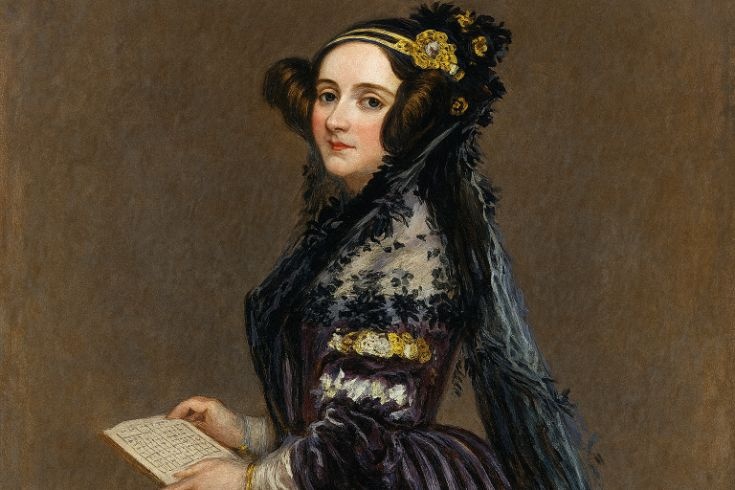
Augusta Ada King, Countess of Lovelace (1815–1852), is recognized as a foundational figure in Ada Lovelace early computing. Her collaboration with Charles Babbage on the Analytical Engine produced the first published algorithm and advanced a theoretical understanding of computation more than a century ahead of modern computer technology. This article explores Lovelace’s intellectual contributions, situates them within 19th‑century scientific culture, and analyzes the essential role of her mother, Annabella Milbanke, in shaping her mathematical development.
1. Introduction
Ada Lovelace’s name is now synonymous with early computing theory, though the technological world she envisioned would not materialize until long after her death. While 20th‑century computing pioneers like Alan Turing and John von Neumann defined modern architecture, Lovelace articulated concepts of programmability and symbolic processing during the 1840s. Her work, especially her commentary known as the “Notes,” positioned her as one of the earliest thinkers to propose that machines could manipulate more than numbers—anticipating the broader scope of digital computation.
For historical context, see:
- Thinking Big: Ada, Countess of Lovelace: https://computerhistory.org/exhibits/thinking-big/
- Computer History Museum profile: https://www.computerhistory.org/babbage/adalovelace
2. Scientific and Social Context of the 19th Century
Lovelace’s contributions must be understood within the intellectual climate of Industrial‑Era Britain. Mechanical automation was transforming industry, yet symbolic logic, computation, and mathematics remained strictly human processes. Additionally, women rarely received the formal scientific training necessary to engage with technical innovation. Against this backdrop, Lovelace’s achievements become even more remarkable: she operated in a male‑dominated scientific culture that largely excluded women from advanced study.
3. Annabella Milbanke and the Formation of a Mathematical Mind
3.1 Annabella’s Intellectual Identity
Ada’s mother, Annabella Milbanke—nicknamed the Princess of Parallelograms—was highly educated and possessed a special aptitude for mathematics. Her unusual commitment to analytical thinking shaped her approach to parenting.
3.2 Educational Strategy
After leaving the poet Lord Byron shortly after Ada’s birth, Annabella took full control of her daughter’s education. She believed a rigorous intellectual program could instill emotional stability and discipline. Under leading mathematicians such as Augustus De Morgan, Ada learned advanced algebra, logic, and scientific reasoning. This foundation was pivotal—establishing the skills Lovelace later applied to her work in Ada Lovelace early computing.
4. Collaboration with Charles Babbage
4.1 The Analytical Engine
Charles Babbage’s Analytical Engine was a revolutionary concept: a general‑purpose mechanical computer with features resembling modern architecture, including memory (the “store”), processing units (the “mill”), and the ability to follow symbolic instructions.
The Science Museum provides original manuscripts and explanations:
4.2 Lovelace’s Notes and Algorithm
Ada’s translation of Luigi Menabrea’s paper in 1843 included extensive notes—three times longer than the original text. “Note G” contained her algorithm for calculating Bernoulli numbers, widely considered the first computer program.
5. Lovelace’s Theory of Computation
5.1 Beyond Numerical Calculation
Lovelace’s central conceptual breakthrough was the recognition that computation could extend beyond arithmetic. In her “Notes,” she proposed that the Analytical Engine could manipulate symbols of any kind, implying that one day machines might compose music, create graphics, or perform tasks beyond numerical calculation. This vision prefigures modern fields such as digital media, algorithmic composition, and artificial intelligence.
5.2 Philosophical Considerations
Lovelace also articulated what later became known as the Lovelace Objection—the idea that machines cannot originate ideas but only execute rules given by humans. While debated in modern AI theory, this argument shows her engagement with the philosophical dimensions of mechanized reasoning.
6. Legacy and Historical Significance
Interest in Ada Lovelace early computing gained momentum in the late 20th century as historians reassessed her writings in the context of computer science. Today her impact is visible in initiatives promoting women in STEM, in the design of the ADA programming language, and in scholarly reassessments of early symbolic computation. Her mother, Annabella, is increasingly recognized as a crucial enabler of her intellectual development.
7. Conclusion
Ada Lovelace’s work represents a profound leap in the conceptualization of machines, pushing beyond calculation toward a vision of symbolic, creative, and rule‑based computation. Supported by Annabella Milbanke’s rigorous educational philosophy, Lovelace forged a path that anticipated the digital age. Her ideas remain foundational—both historically and philosophically—as computing continues to evolve.