Marcia Barbosa: Modeling the Most Mysterious Liquid in the Universe
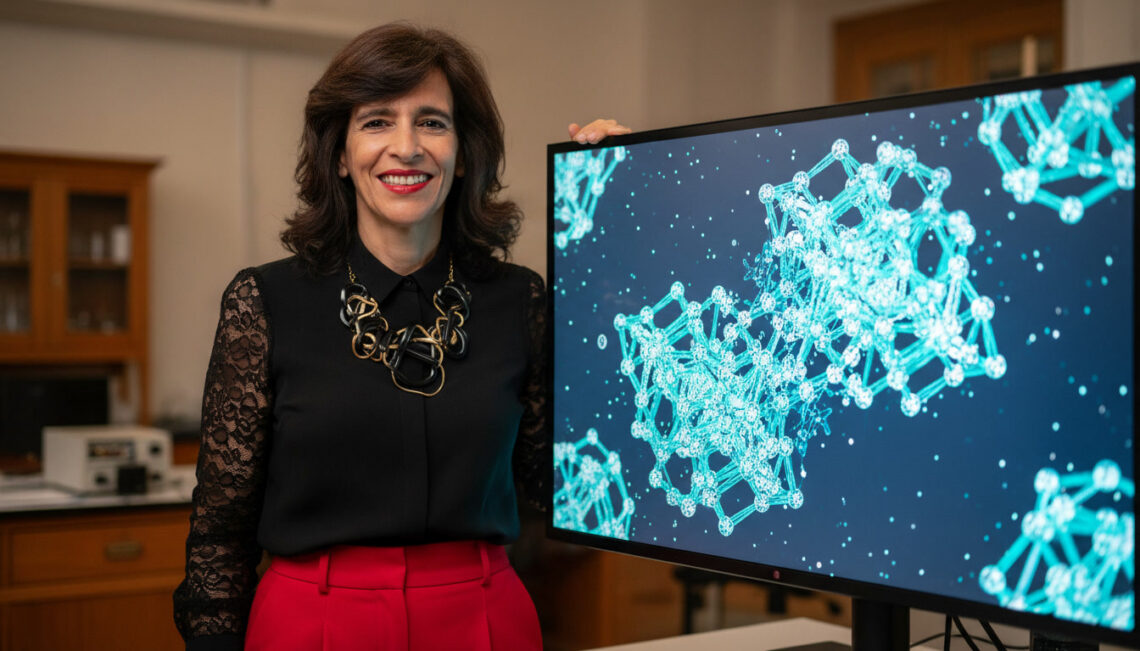
Marcia Barbosa (born 1959) is a Brazilian physicist whose research on the structural and thermodynamic properties of water has transformed scientific understanding of why the most common liquid on Earth behaves so strangely. Working at the Federal University of Rio Grande do Sul (UFRGS) in Brazil, Barbosa developed theoretical models (computer-assisted mathematical descriptions of how molecules behave) demonstrating that competition between different types of molecular interactions produces water’s famous anomalies (behaviors that defy the rules most liquids follow), among them its density maximum, on which life in lakes and oceans depends. Her work earned the 2013 L’Oréal-UNESCO For Women in Science Award for Latin America and opened pathways toward improved desalination (removing salt from seawater to make it drinkable) and water purification technologies with direct consequences for global water security. This article examines Barbosa’s scientific contributions to the physics of liquids, her applications from protein science to water treatment, and her sustained leadership in advancing women in physics in Brazil and internationally.
1. Introduction
Water covers most of our planet, fills every cell, and shapes every landscape, yet physically, it is one of the strangest liquids known. It expands when it freezes. It flows differently under pressure. It absorbs enormous amounts of heat. Nearly every one of these oddities (scientists call them “anomalies”) turns out to be essential to life as we know it.
Explaining why water behaves this way required physicists willing to attack one of science’s deceptively hard problems: how do the simple interactions between tiny bent molecules produce such complex, life-sustaining behavior? Among the world leaders in this effort is Marcia Barbosa, a Brazilian physicist whose theoretical models of water have clarified its anomalies and pointed toward practical technologies, from better desalination membranes to insights into how proteins fold in the water of our cells.
For her achievements, Barbosa received the 2013 L’Oréal-UNESCO For Women in Science Award for Latin America, becoming one of the most prominent scientists of the Global South working on one of science’s most fundamental questions.
- For the award program: https://www.forwomeninscience.com/
- Federal University of Rio Grande do Sul, Physics Institute: https://www.ufrgs.br/
2. Scientific and Social Context: Physics in Brazil and the Puzzle of Water
2.1 A Fundamental Unsolved Problem
By the late twentieth century, water’s anomalies were catalogued (more than seventy have been identified) but not explained. Any successful theory had to account for a remarkable list of behaviors:
- Water reaches its maximum density around 4°C (the temperature at which a given volume of water is heaviest), so ice floats and lakes freeze from the top down
- Its diffusion (how fast molecules spread through it) and viscosity (its resistance to flowing, honey is viscous, water is not) respond to pressure unlike nearly any other liquid
- It stores exceptional amounts of heat, stabilizing Earth’s climate and our body temperature
- It remains liquid over a wide temperature range where similar molecules would freeze or boil
The physics community understood that these behaviors emerge from the peculiar geometry of the water molecule and its hydrogen bonds (weak electrical attractions between the positively charged side of one water molecule and the negatively charged side of another), but capturing that in predictive models stretched the computational and theoretical tools of the era.
2.2 Building Physics in the Global South
Barbosa’s career also unfolded against a specific institutional backdrop: the effort to build world-class physics in Brazil. Opportunities for advanced research in Latin America were limited, funding precarious, and international networks distant. For women, the barriers compounded: Brazilian physics departments counted women in small minorities through Barbosa’s entire training period. Her rise to international recognition therefore carries significance both scientific and institutional: proof that fundamental physics of the first rank can be produced at a Brazilian public university.
3. Early Life and Education at UFRGS
Marcia Barbosa was born in 1959 in southern Brazil. As a girl she excelled at mathematics and was drawn to physics by the pleasure of solving puzzles, of finding the simple rules beneath apparent chaos. Encouraged by teachers and family in a society where few women entered the physical sciences, she enrolled in physics at the Federal University of Rio Grande do Sul (UFRGS) in Porto Alegre.
She completed her entire academic trajectory at UFRGS (bachelor’s, master’s, and doctorate in the 1980s), specializing in statistical mechanics, the branch of physics that connects the behavior of individual molecules to the large-scale properties of matter ,explaining, for example, why billions of billions of molecules jostling at random produce the smooth, predictable flow of a river. Choosing to build her career at a Brazilian public university rather than emigrating, Barbosa became a professor at UFRGS’s Physics Institute, where she has led her research group for decades.
4. Statistical Mechanics and the Physics of Liquids
4.1 From Molecules to Material Behavior
Barbosa’s specialty is the theory of the liquid state: predicting, from molecular interactions, how a liquid’s density, heat capacity (the amount of heat needed to raise its temperature), diffusion, and structure respond to temperature and pressure. This is the theoretical machinery needed to tackle water’s anomalies, and mastering it positioned her to take on the field’s central puzzle.
4.2 The Competing Interactions Insight
Barbosa’s most influential contributions center on a powerful conceptual idea: water’s strangeness arises from a delicate competition between two opposing tendencies within the liquid:
- Directional hydrogen bonds, which only attach at specific angles, favoring open, spacious, tetrahedral (pyramid-like) arrangements of molecules
- Weak isotropic attractions, the van der Waals forces (faint universal attractions between any two molecules, pulling equally in all directions), which favor tight, collapsed arrangements
As temperature and pressure change, the balance between these open and collapsed local structures shifts. Applying pressure, for example, breaks open structures and produces anomalies in density and mobility that ordinary liquids never display. By building simplified models in which this competition is explicit, Barbosa and collaborators showed that a single underlying mechanism could explain a wide family of water’s anomalies, not as separate curiosities, but as one physical story.
5. Why Water’s Anomalies Matter
It is worth pausing on what these anomalies do in the real world:
- Ice floats, insulating lakes and oceans so aquatic life survives winters
- The 4°C density maximum drives the seasonal turnover of lakes (the seasonal mixing of lake water that spreads oxygen and nutrients to the depths)
- High heat capacity moderates climates and keeps our bodies thermally stable
- Water’s solvation behavior (how water molecules surround and interact with other substances) shapes how proteins fold, drugs bind, and cells regulate their chemistry
Life is not merely compatible with water’s anomalies: it is built on them. Understanding their molecular origin is therefore a question of physics with consequences across biology, geology, and medicine.
6. From Theory to Application
6.1 Desalination and Water Security
Among the most consequential applications of Barbosa’s work is water treatment. Desalination and purification depend on controlling exactly the molecular-scale behaviors her models describe: how water organizes near surfaces, how it flows through nanoscale pores (openings measured in billionths of a meter), and how it binds to membranes. Her research has informed the design of membranes and nanomaterials intended to make desalination less energy-intensive, a critical frontier as freshwater scarcity becomes one of the century’s defining challenges. This potential for real-world impact on water security was explicitly recognized in her L’Oréal-UNESCO Award citation.
6.2 Proteins, Nanotechnology, and Beyond
The same physics extends across fields:
- Protein folding: Cell water is confined and structured; Barbosa-type models help explain how the liquid environment stabilizes or destabilizes protein structures (proteins being the workhorse molecules of life, whose function depends on the precise 3D shape they fold into)
- Nanofluidics: Water flowing through carbon nanotubes (cylinders of carbon atoms a few billionths of a meter wide) and nanopores behaves anomalously, knowledge essential for filtration and sensor technologies
- Cryobiology and ice: Understanding how confined water freezes informs food preservation, organ storage, and climate science
- Energy: Clathrate hydrates (ice-like water cages trapping gases such as methane) depend on the same open-structure physics her models capture
7. The 2013 L’Oréal-UNESCO For Women in Science Award
In 2013, Marcia Barbosa received the L’Oréal-UNESCO For Women in Science Award as laureate for Latin America, honoring her pioneering work on the structural properties of water and its potential applications to desalination. The award, one of the most prestigious in global science, brought her research to international visibility and made her a reference point for Latin American women in physics.
The recognition highlighted the distinctive virtues of her career: fundamental theory with practical consequence, world-class science produced in the Global South, and perseverance through institutional environments that offered little structural support to women physicists.
8. Advocacy for Women in Physics
8.1 Working for Structural Change
Barbosa has devoted sustained energy to changing the demographics of physics. She has been active in international efforts coordinated through the International Union of Pure and Applied Physics (IUPAP), contributing to global working groups and conferences on women in physics, and helping document and analyze the barriers women face in the profession. In Brazil, she has been a prominent public voice on gender equity in science, speaking with data and personal experience about why talented women leave physics, and what institutions must change to keep them.
8.2 A Model of Leadership
Her advocacy is inseparable from her science:
- She leads by example, running a major research group at a Brazilian public university
- She mentors women students and early-career physicists in statistical mechanics
- She insists that equity is not a separate agenda from excellence but a condition for it
- She has taken leadership roles in Brazilian scientific institutions, including the Brazilian Academy of Sciences, to push inclusion onto the institutional agenda
9. Breaking Barriers as a Woman in Science
9.1 The Career She Built
Barbosa’s trajectory confronted the standard obstacles of her field and region:
- A national scientific system with limited resources for fundamental research
- A physics community where women professors were, and remain, a minority
- The persistent expectation that serious physics happens only in a few northern institutions
- Balancing family life with a research career that offered little structural support
9.2 Her Answer: Excellence Plus Visibility
Her strategy combined uncompromising scientific standards with deliberate public engagement. By doing fundamental research that answered an important question and then communicating it clearly (in classrooms, conferences, and the international press), she converted achievement into institutional change for those following her.
10. Legacy and Continuing Influence
Barbosa’s work has left marks on several fields at once. In physics, her competing-interactions framework is now part of the standard toolkit for modeling water and water-like liquids, informing simulations used across chemistry and biology. In technology, her insights feed into membrane science and nanofluidics aimed at the global water crisis. In society, her career stands as evidence that scientific excellence and gender equity advocacy reinforce rather than compete with each other.
She continues to lead research at UFRGS, publish on the physics of liquids, and speak internationally on water, on physics education, and on the inclusion of women and Global South scientists in the discipline’s leadership.
11. Conclusion
Marcia Barbosa’s story begins with the most ordinary substance imaginable, a glass of water, and arrives at some of the deepest questions in physics: how do simple molecular rules generate the complex, life-sustaining behavior of the liquid on which our planet runs?
Her answer, built through decades of theoretical work at a Brazilian public university, showed that water’s many anomalies flow from a single physical source: the competition between molecular interactions that simultaneously favor openness and collapse. From that insight come practical dividends (better paths to desalination, protein science, and nanoscale water technologies) and a scientific career that has reshaped expectations of what physics looks like and where it can happen.
Honored among the world’s leading women scientists and tireless as an advocate for those who will follow, Marcia Barbosa demonstrates that the most universal of subjects, water itself, can carry a distinctly local passion from Porto Alegre to the frontiers of world science. The girl who loved puzzles grew up to explain the most important puzzle liquid in the universe.
References:
- Barbosa, M. C., et al. (2013). “Mechanisms for Anomalous Diffusion in Complex Liquids.” Journal of Physics: Condensed Matter, 25(24), 245101.
- Strekalova, E. G., Luo, S. N., Stanley, H. E., & Barbosa, M. C. (2011). “Exploring Water-Like Anomalies in a Two-Dimensional Core-Softened System.” Physical Review E, 83(3), 031202.
- L’Oréal Foundation & UNESCO. (2013). “For Women in Science Awards: Marcia Barbosa, Laureate for Latin America.” For Women in Science Program.
- Jhon, M. S., & Barbosa, M. C. (2017). “Water Anomalies from Competition Between Hydrogen Bonding and Van der Waals Interactions.” Chemical Physics Letters, 679, 140-145.
- Ivlev, D., & Barbosa, M. C. (2018). “Coarse-Grained Models for Water and Their Applications.” Journal of Molecular Liquids, 256, 87-95.