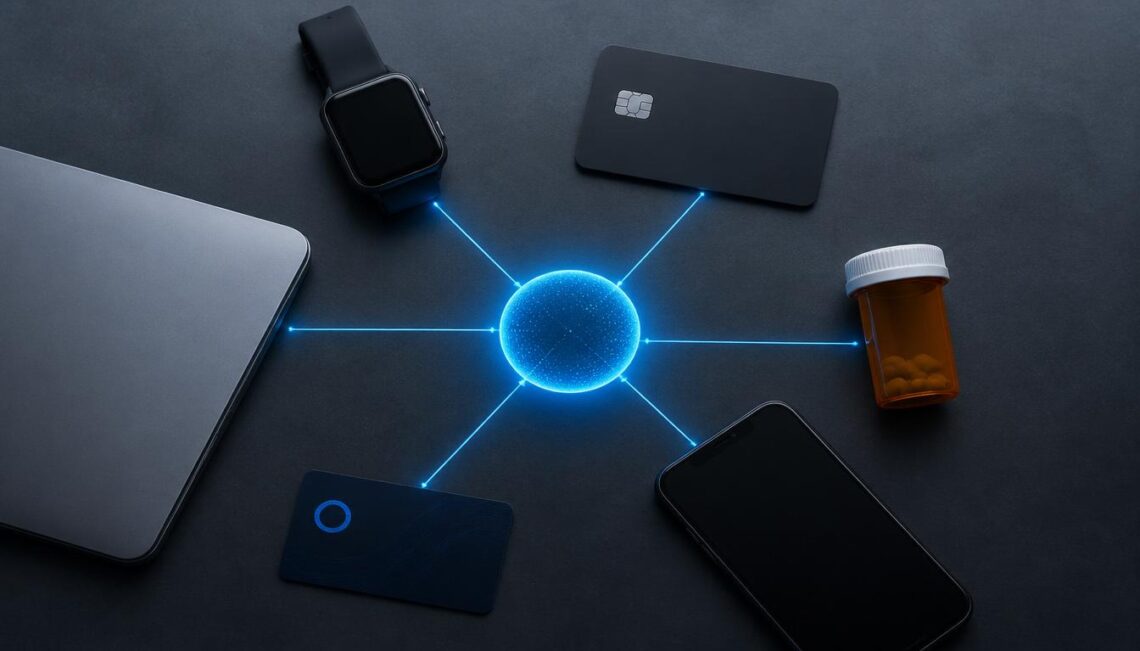
From medical records to smart devices, your data footprint is far larger than you think.
Personal data is any information that can be used to identify you — your name, social security number, date and place of birth, your mother’s maiden name, even the messages you exchange with family. Cybercriminals can use this sensitive information to impersonate you, infringing your privacy and potentially causing serious, lasting damage to your reputation.
Medical records are particularly sensitive. Every doctor’s visit adds to your electronic health records. Fitness trackers compound this: heart rate, blood pressure, and blood sugar levels are transferred, stored, and processed via the cloud. Rising healthcare costs have fuelled medical identity theft, where criminals steal insurance credentials to claim benefits in your name — and those fraudulent procedures become part of your permanent medical file.
Employment and financial data round out the picture. Past employers, performance reviews, bank statements, credit ratings, tax returns — together they paint a portrait that enables everything from fake loan applications to fraudulent tax refunds.
“It might seem that information available online is free. But is privacy the price we pay for this digital convenience?”
The demand for your data extends well beyond criminals. Internet service providers track your activity and in some countries may sell it to advertisers. Social media platforms mine your search histories, geolocation, and political and religious signals to sell targeted advertising. Websites plant cookies that trail you across the web. Even the fitness tracker on your wrist is, in a meaningful sense, a data-collection device first.
Smart devices — wearables, smart home sensors, connected appliances — now generate information about you continuously. As the global fitness tracker market expands, so does the attack surface for your most intimate personal data.